Hedra Helix (Ivy)
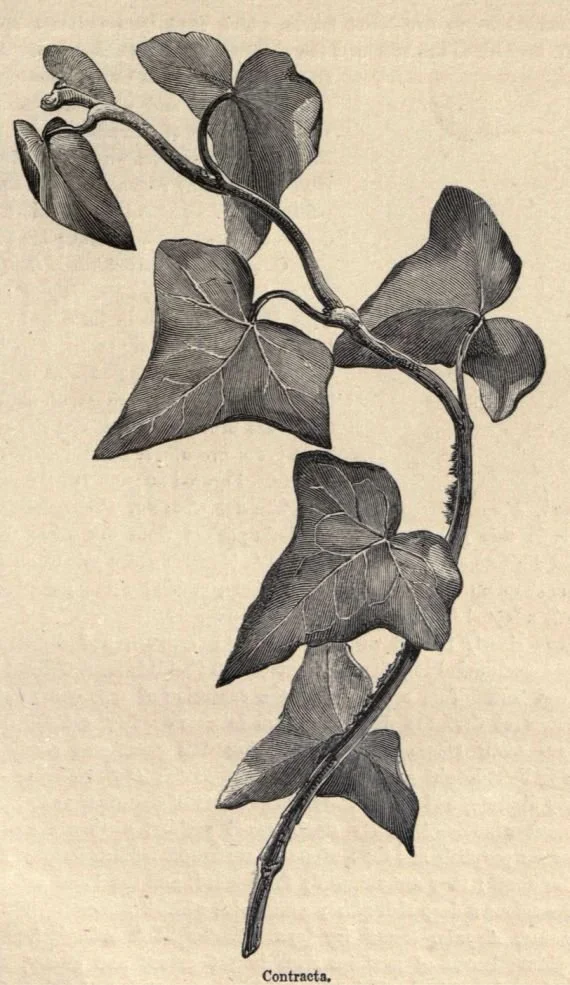
Persistent. All-consuming. Sacred to both wild abandon and faithful devotion.
Lore & History
Held in high esteem by the ancients, ivy is a plant of paradox , both binding and liberating in nature. Its evergreen leaves, winding and unrelenting, were once seen as symbols of eternal life and devotion. Yet in Greek myth, ivy crowned the head of Bacchus (Dionysus), god of revelry and ecstasy, representing intoxication, freedom, and the loosening of earthly boundaries.
In Roman and Celtic traditions, ivy was worn in celebration and ceremony, entwined with the energies of the vine and the cycles of the earth. During the Middle Ages, its association with pagan rites led the early Church to ban its use in Christmas decorations, a decree that failed to suppress the enduring custom of ivy in winter festivities.
Native to Europe, Hedera helix has been used medicinally since the time of Hippocrates and Dioscorides, finding its way into countless remedies for coughs, joint pain, and skin afflictions. It is a plant that both climbs and clings.
Traditional Indications
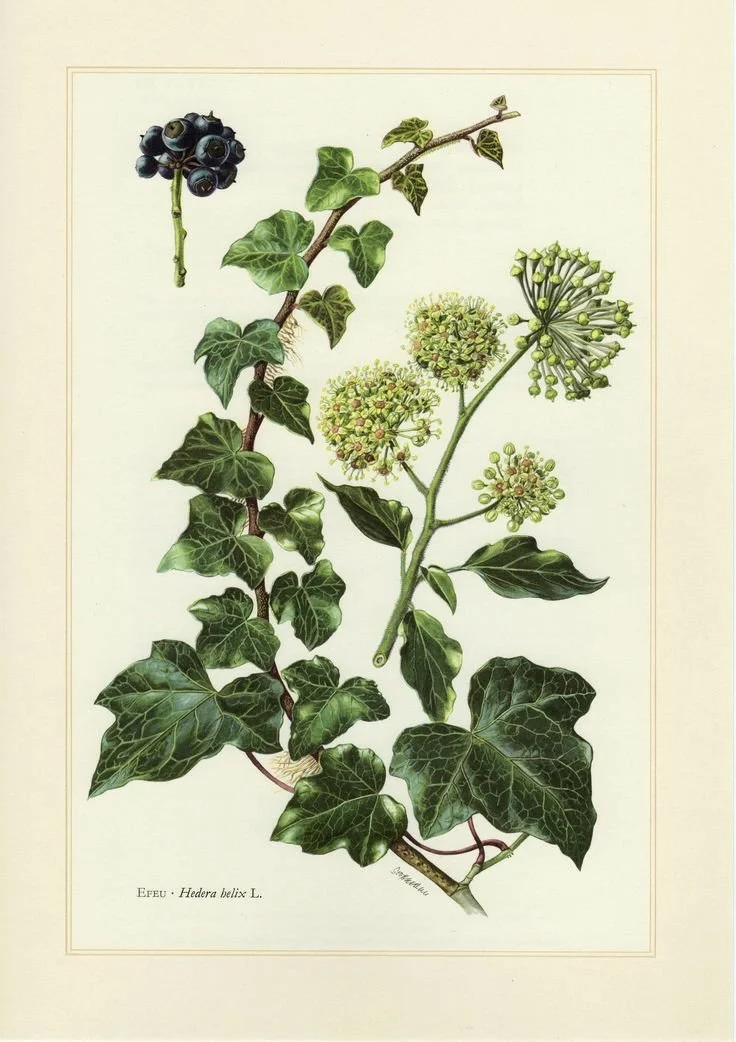
Traditionally, ivy leaf has been used for:
Respiratory disorders including:
Coughs associated with the common cold
Asthma
Acute and chronic bronchitis
Inflammatory and pain conditions such as:
Arthritis
Gout
Headache
Topical uses for:
Skin parasites, wounds, and minor infections
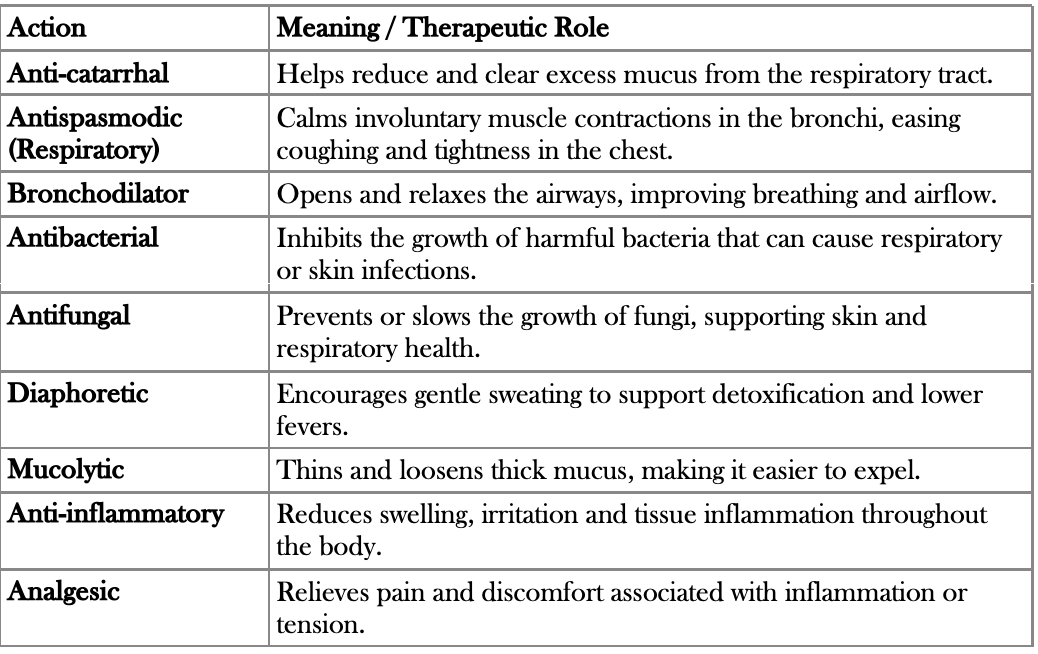
In traditional European medicine, ivy preparations were also employed as gentle diaphoretics to promote sweating, and as antispasmodics to calm constriction in the respiratory tract.
Actions
How It Works
Ivy leaf supports the respiratory system by thinning mucus, easing its expulsion and relaxing the airways. These effects are largely attributed to its saponin compounds, which act as natural surfactants in the lungs. α-Hederin and hederacoside C have been shown to enhance β₂-adrenergic activity in the bronchi, helping to open the airways and make breathing easier.
Its flavonoids and phenolic acids help calm inflammation by moderating cytokine activity and inhibiting the NF-κB pathway. These actions explain ivy’s usefulness in conditions involving congestion, pain and irritation.
Beyond the respiratory system, ivy demonstrates broad antimicrobial and antifungal effects. Its polyphenols and volatile oils disrupt bacterial membranes and inhibit fungal growth, which aligns with its historical use for skin parasites and infections.
Ivy’s antioxidant compounds protect cellular tissues, while saponins and sterols support vascular tone. Trace vitamins and tannins contribute to tissue repair and resilience.
It is a plant that clears what is stagnant, softens what is rigid and invites movement throughout the body.
(See table below for a summary of key constituents.)
| Constituent Group | Key Compounds | Main Actions |
|---|---|---|
| Saponins | Hederacoside C, Hederacoside B, α-Hederin, Hederagenin | Mucolytic, bronchodilatory, anti-inflammatory |
| Flavonoids | Quercetin, Kaempferol, Rutin, Isoquercitrin, Astragalin | Antioxidant, anti-inflammatory, capillary-protective |
| Phenolic Acids | Caffeic, Chlorogenic, Rosmarinic, p-Coumaric acids | Antimicrobial, tissue healing |
| Sterols | β-Sitosterol, Stigmasterol, Campesterol | Cardiovascular and anti-inflammatory support |
| Volatile Oils | α-Pinene, β-Pinene, Limonene, Sabinene | Antimicrobial, aromatic, bronchodilatory |
| Vitamins & Polyphenols | C, E, Provitamin A, Catechins, Proanthocyanidins | Antioxidant, tissue repair, immune support |
Reflections
As I wrote this, a single ivy leaf sat on my desk; no roots, just floating in a little water. Days have passed, and she’s still bright and alive. There’s something quietly powerful about that.
Working with ivy feels like working with paradox. It binds yet liberates, steadies yet stirs. In the body, it helps release what’s held too tightly - the mucus, the tension, the places where breath gets caught. In spirit, it speaks of endurance and devotion, but also of letting go and trusting that strength can exist in softness.
References
Fazio, S., Pouso, J., Dolinsky, D., Fernandez, A., Hernandez, M., Clavier, G., & Hecker, M. (2006a). Tolerance, safety and efficacy of Hedera helix extract in inflammatory bronchial diseases under clinical practice conditions: A prospective, open, multicentre postmarketing study in 9657 patients. Phytomedicine, 16(1), 17–24. https://doi.org/10.1016/j.phymed.2006.05.003
Greives, M. (1995). A modern herbal | Ivy, common. https://www.botanical.com/botanical/mgmh/i/ivycom15.html
IVY LEAF. (2012). In HERBALEXTRACTS.COM.AU. https://ypi.bmw.mybluehost.me/sites/default/files/2024-07/extract_ivyleaf_monograph.pdf
Karakitsou, M. (2023, December 19). The Ivy in Greek Mythology — Mira Karakitsou. Mira Karakitsou. https://mkarakitsou.com/materia-mythica/ivy
Shokry, A., El-Shiekh, R., Kamel, G., & Ramadan, A. (2021). Phytochemical Contents, Biological Activities and Therapeutic Applications of Hedera Helix (Ivy Leaf) Extracts: A Review. The Natural Products Journal, 12(4). https://doi.org/10.2174/2210315511666210917111801